BIODIGITAL ORGANISMS
2023-2024
This initial phase introduced the project’s foundational inquiries into computational life, emergence, and complex adaptive systems.
The newer taxonomy-based phase expands these questions toward artificial life, hybrid intelligence, and ecosystem futures.
View Phase 2: BioDigital Organisms: Taxonomies of Artificial Life at: www.amykarle.com/project/bio-digital-taxonomies/

CONCEPT & CONTEXT
Developed during a period of rapid advances across AI and biotechnology, this project sits at the intersection of computational design and biological thought. It considers how design and technological systems may reshape how we discuss and define life, intelligence, and agency.
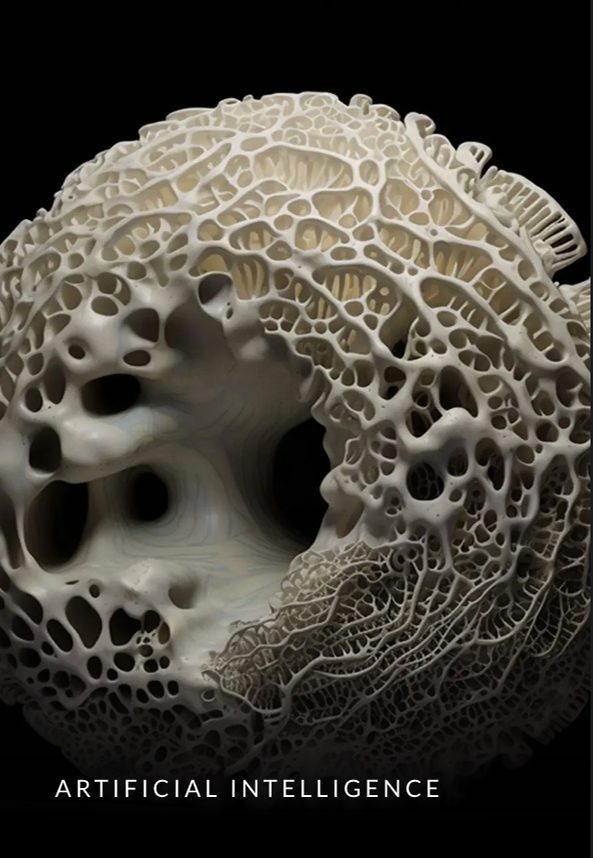
By setting initial constraints, conditions, and evolutionary rules informed by biological principles, the project allows AI to generate entities with lifelike morphologies, architectures, and behaviors through computational evolution. These studies are presented as in silico explorations and conceptual models, opening space to envision possible synthetic and hybrid forms without claiming biological realization.
BioDigital Organisms explore the relationship between biological intelligence and artificial systems, and the potential for designed entities to exhibit adaptive behaviors. It invites reflection on the ethical and existential implications of modeling, creating, and engaging digital life-like forms and their place within broader human, environmental, and technological evolution.


This project pioneers the integration of AI within biodesign, combining computational design and biological principles to generate adaptive entities in silico. AI-driven processes model behaviors such as growth, interaction, adaptation, and variation, allowing speculative biological scenarios to be explored computationally.
By investigating biological processes digitally, BioDigital Organisms can reduce reliance on material experimentation at this stage while opening new avenues for computational design, biotechnology, and systems research.
- Presents new avenues for envisioning synthetic and hybrid life-like systems and how they engage in natural ecosystems
- Creates a framework for exploring the emergent properties of complex systems
- Extends digital design and biodesign through computational studies of lifelike form and behavior
- Demonstrates how digital environments can be used to model, examine, and imagine possible bio-digital futures


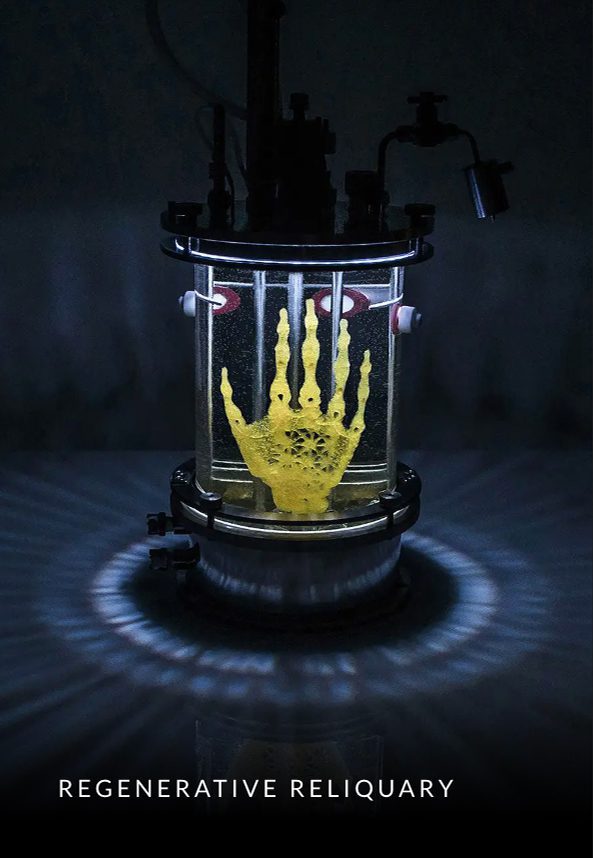
AI-Assisted Design for a Generative Bioreactor: An early study in the BioDigital project, exploring AI-assisted biodesign, AI-assisted form generation, biodesign logic, emergent generative structures, and possible architectures for future bio-digital systems.
BioDigital Organisms challenges traditional assumptions about life and intelligence. The work invites us to reconsider these concepts in a digital context, sparking discourse at the intersection of design, technology, and biology.
The project contributes to broader reflection on the ethical and philosophical implications of creating synthetic and hybrid systems, while offering a platform for inquiry into the future of life, intelligence, and technological evolution.
- Opens inquiry into how synthetic and bio-digital life might be imagined and designed
- Sparks discourse on the ethical implications of artificial life and hybrid systems
- Offers new avenues for computational design research and exploration
- Supports dialogue across art, science, technology, and philosophy
- Contributes to evolving conversations about responsible technological development


Featured in:
Issues in Science and Technology, National Academy of Sciences, January 2024
IEEE Computer Graphics and Applications Volume 46, Issue 2 Mar-Apr 2026